Recent Publications
Selected publications can be browsed as short summary cards from the homepage.
Contribution of galvanic coupling with TiN, TiAlN, and CrN to the corrosion of steel in neutral and acidic chloride solutions.
Burçak Avcı · Materials and Corrosion · 2023
Correlative Tomography.
Cem Örnek · Scientific Reports · 2014
Comparative tribological behaviors of TiN, CrN and MoNCu nanocomposite coatings.
Muhammet Kürşat Kazmanlı · Tribology International · 2008
Laboratory Infrastructure
-
-
-
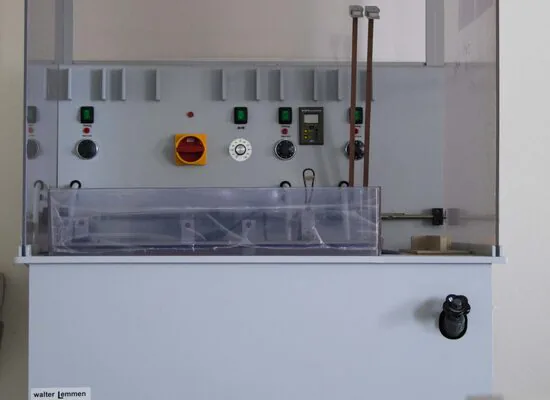
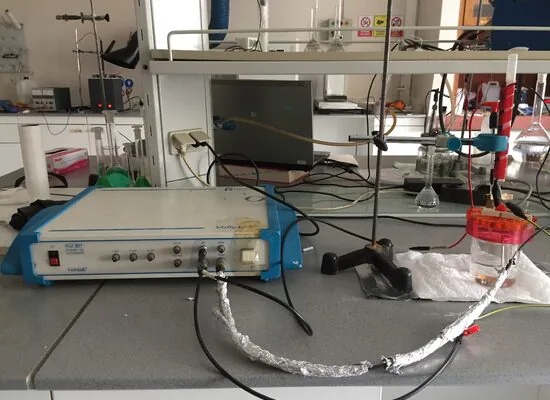
Electroless Electroplating Unit
Equipment Electroless Electropating Unit Brand Walter Lemmen Organic, chemical or galvanic protective coatings are used for oxidation and...
-
-
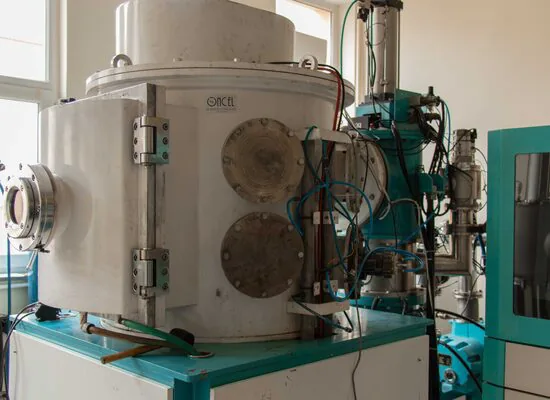
Salt Spray Chamber
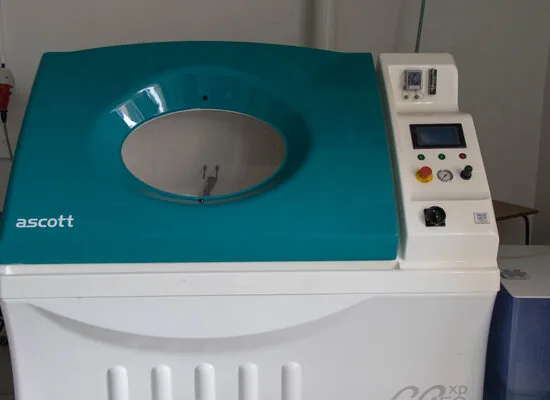
Salt Spray Chamber
Specifications Temperature Range Adjustable from ambient to +50°C/+122°F (Option ACC03 increases temperature range from ambient to +60°C/+140°F) Salt...
-
SEM-Scanning Electron Microscopy
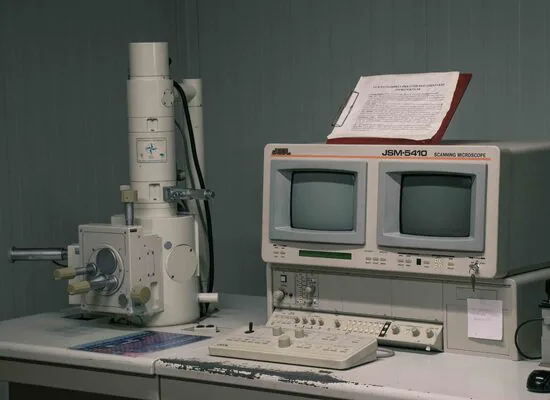
Equipment SEM-Scanning Electron Microscopy Brand JEOL JSM 5410 Scanning Electron Microscope (SEM) is a type of electron microscope...
-
XRD-X-Ray Diffractometer
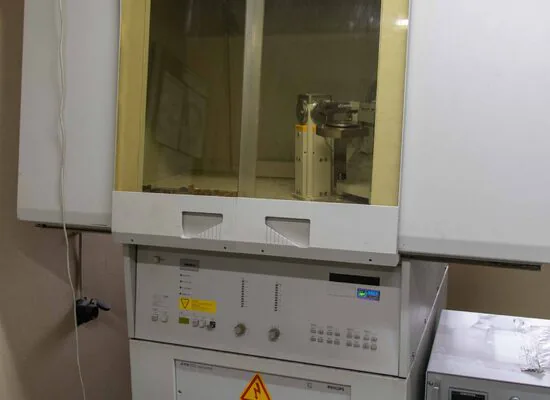
Equipment XRD-X-Ray Diffractometer Brand Philips Specifications X-ray tube (Co, but others at request): line focus and point focus...
-
Areas of
Expertise
- Tribological coatings are developed to minimize friction, wear and surface damage.In our laboratory, thin films based on metals, ceramics and composites are produced to optimize the mechanical durability of surfaces. Coating morphology, hardness and adhesion are examined in detail. This branch of surface engineering is especially critical for the automotive, energy and tooling industries. The coating systems we develop improve service life, energy efficiency and functional stability. Each project is supported by experimental analyses that simulate real operating conditions.
- Thermal barrier coatings developed for high-temperature applications protect materials against thermal load in turbine components and engine systems.TBC systems produced in our laboratory provide high oxidation resistance and low thermal conductivity through multilayer ceramic architectures. These coatings reduce heat transfer and extend substrate lifetime. Microstructure control, porosity tuning and thermal shock testing form the basis of our work. The goal is to develop durable surface systems that can sustain performance at elevated temperatures.
- Functional coatings do more than protect; they also impart electrical, optical, catalytic or hydrophobic properties to surfaces.In our laboratory, these coatings are designed at the intersection of materials science and surface chemistry. The resulting systems are used across a wide range of applications from energy systems to biomedical technologies. Each coating is optimized for a specific function and validated through characterization testing. This approach turns coating technologies into multifunctional solutions.
- The success of coating and surface modification studies depends on detailed analysis.In our laboratory, advanced characterization techniques such as SEM, EDS, XRD, FTIR and profilometry are used to evaluate the morphological, chemical and structural properties of surfaces. Each analysis helps us understand material-coating interaction and improve process optimization. In this way, our surface engineering work is integrated with a comprehensive analytical approach supported by scientific rigor, not just coating production.
Scientific Consistency and an Interdisciplinary Approach
Our surface engineering work is carried out at the intersection of materials science, chemistry and mechanical engineering. In our research projects, experimental data is supported by theoretical modeling so that conclusions rely not only on observation but also on scientific foresight.Experimental Capability and Infrastructure Strength
Our laboratory has broad experimental infrastructure ranging from tribological test systems to magnetron sputtering units. These capabilities allow us to investigate material behavior at micro and nano scales and simulate different environmental conditions.Data Quality and Measurement Reliability
Each measurement is carried out with calibrated instruments and standard operating procedures. Repeatability, error analysis and statistical confidence intervals are core criteria in all of our work.Open Science and Transparent Method Reporting
All generated data is documented through detailed experimental protocols, parameter sets and characterization reports. This approach safeguards both publication quality and the reproducibility of research.Effective Project Management and Disciplined Scheduling
Research processes are managed through Gantt-based planning and regular interim reporting. Project stakeholders can monitor experimental progress transparently, which supports timely and high-quality output.Continuous Improvement and Scientific Currency
The laboratory team continuously follows recent literature and technological advances in surface engineering. Our methods are updated dynamically so that each new project is built on stronger accumulated knowledge than the last.We turn science into technology and technology into industrial solutions. By conducting research and development in surface engineering at international standards, we contribute to Turkey's competitiveness.
- Prof. Dr. Kürşat Kazmanlı, ITU Surface Engineering Laboratory
About
The ITU Surface Engineering Laboratory operates within the Department of Metallurgical and Materials Engineering at Istanbul Technical University. Our laboratory conducts research at national and international level in surface modification, coating technologies and advanced materials characterization.
By combining fundamental research with industrial collaboration, we develop corrosion-resistant, functional and high-performance surfaces.
Our Team

Prof. Dr. Kürşat Kazmanlı
Research Lead

Assoc. Prof. Dr. Cem Örnek
Researcher

Dr. Selim Ertürk
Researcher

Dr. Burçak Avcı
Researcher

MSc. Göksel Hızlı
Researcher

MSc. Utku Orçun Gezici
Researcher

MSc. Deniz Nalcı
Researcher

Eng. Sevgin Türkeli
Researcher

Eng. Seyhan Atik
Researcher
Alumni
-
Beste PayamMSc, 2022 · Max-Planck-Institut für Eisenforschung GmbHUnderstanding the unusual passive behaviour of high-strength hybrid steel in corrosive environments.
-
Çağatay YelkarasıPhD, 2022 · Texas A&M UniversityNovel coatings that reduce restenosis risk and accelerate natural endothelialization in metallic vascular stents.
-

Eren SeçkinPhD, 2022 · BPLASInvestigation of the growth kinetics and morphological transitions of the oxide formed during porous anodization of titanium in ethylene glycol-based electrolytes.
-
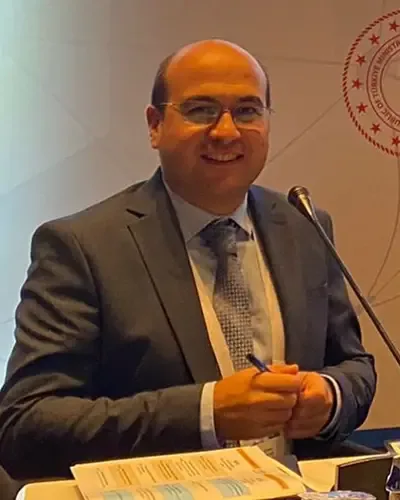
Erkan KaçarPhD, 2022 · Hakkari ÜniversitesiProduction of titanium carbide layers on steel by a cathodic arc FBB-based deposition method.

Partner Institutions


Contact Details
Address
ITU Faculty of Chemical and Metallurgical Engineering, Department of Metallurgical and Materials Engineering, Maslak, 34469, Istanbul